
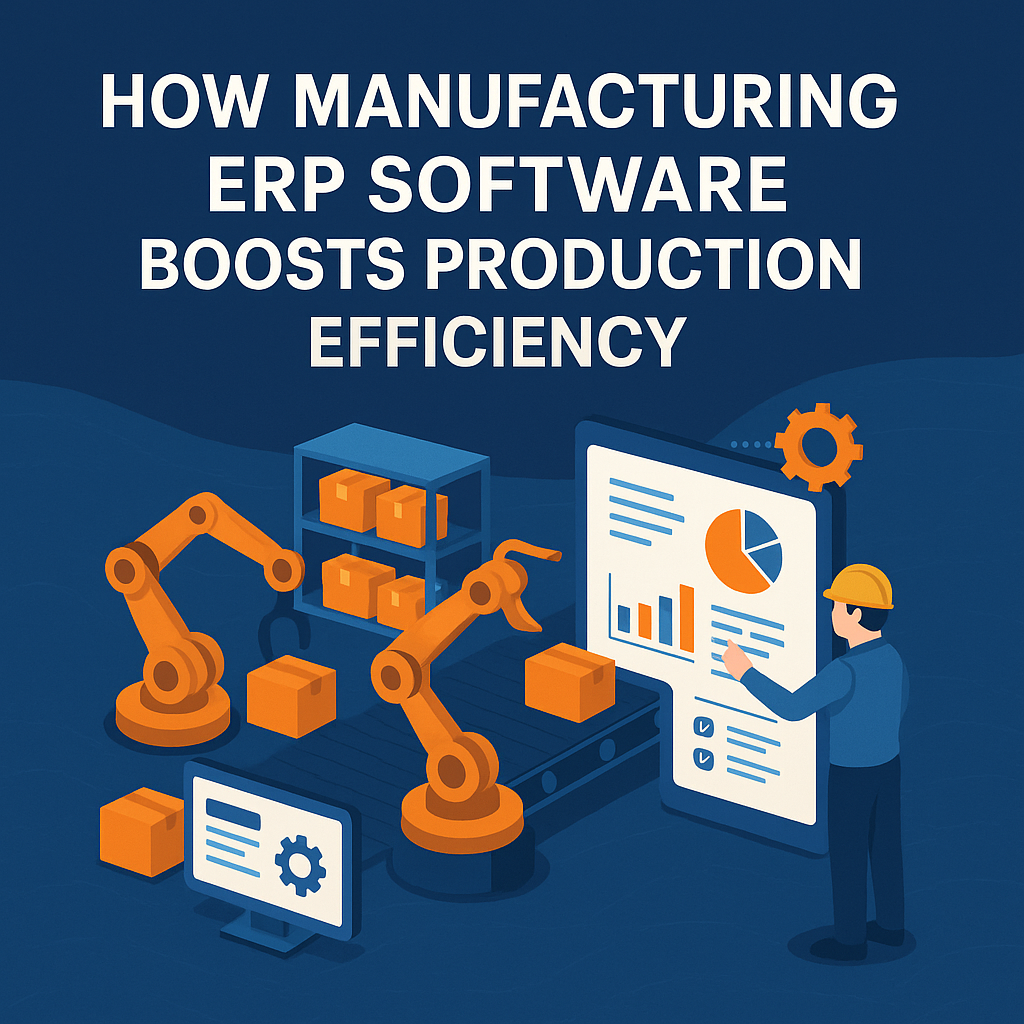
How Manufacturing ERP Software Boosts Production Efficiency
Manufacturing ERP Software boosts production efficiency by giving teams real time information, faster planning tools and clearer control over every stage of the workflow. It connects production, stock, machines and people in a single system so factories work with fewer interruptions and higher accuracy.
This guide covers how ERP supports production, why it reduces mistakes, how it improves planning and what changes manufacturers notice once the system is active.
Why Real Time Data Matters in Manufacturing
Real time data gives production teams an accurate picture of what is happening on the factory floor at that exact moment. This helps supervisors make quick decisions and avoid delays.
ERP systems update the second an activity takes place.
For example:
- Stock levels adjust the moment materials are issued.
- Work orders refresh as soon as an operator starts or completes a step.
- Machine downtime appears immediately instead of waiting for end-of-shift reports.
This visibility allows planners to spot slow orders, follow material movement and adjust schedules before issues grow. Many factories connect sensors to machines so cycle counts, temperature changes and stoppages flow straight into the system. Small shifts in machine behavior often appear before a breakdown, and ERP helps teams catch them early.
How ERP Strengthens Production Planning
Production planning becomes more reliable when schedules adapt automatically to real time conditions. ERP recalculates plans whenever demand, stock levels or machine availability changes.
This helps because:
- A new urgent order reshapes the plan instantly.
- A machine marked for maintenance updates the schedule.
- Low stock alerts show which work orders may be delayed.
ERP planning tools highlight patterns that are hard to see manually.
For example:
- Certain machines are overloaded often.
- Some products consistently take longer than expected.
- Labour usage changes from shift to shift.
These insights help planners balance workloads and guide teams with clear expectations. Comparing actual cycle times with planned cycle times also shows which stages need improvement.
How Better Inventory Tracking Increases Efficiency
Inventory directly affects production speed because every order depends on material availability. ERP links stock movement with production so materials flow at the right pace.
The system updates instantly when an item is received or consumed. This removes guesswork that commonly causes stoppages.
Strong inventory tracking supports:
- Accurate reorder planning.
- Lower scrap by identifying where waste occurs.
- Identifying slow moving and fast moving items.
- Avoiding expired or damaged stock.
Many factories also use ERP forecasting to prepare for seasonal demand. When the system studies past consumption, it predicts the right purchase timeline and reduces last-minute orders.
How ERP Strengthens Quality Control
Quality improves when it becomes part of the production process instead of something checked at the end.
ERP lets manufacturers add checkpoints anywhere in the workflow. Operators log results in the system, and the next step only begins if the batch meets the required standard.
This helps with:
- Early detection of defects.
- Better traceability during customer complaints.
- Less rework because issues are caught at the correct stage.
- Cleaner reports during audits.
Each batch carries its full history of tests, samples and inspection notes. ERP stores this record so it is easy to see how a product moved from raw material to finished goods.
Which Costs Become Clear With ERP?
Manufacturing costs often rise because of small inefficiencies that are hard to measure manually. ERP captures these details so managers understand what drives expenses.
ERP tracks:
- Labour hours used for each order.
- Machine usage and energy consumption.
- Scrap levels and material waste.
- Overheads linked to each production batch.
This data helps manufacturers compare cost patterns. For example, if one supplier’s material creates more scrap, the system logs the recurring waste. If a machine uses more energy in specific shifts, ERP highlights the change.
Managers can adjust processes and compare improvements across weeks or months.
How ERP Improves Machine Maintenance
Unexpected breakdowns slow down production and lead to losses. ERP supports maintenance by tracking machine condition based on real usage instead of fixed schedules.
Many factories shift to:
- Cycle based maintenance
- Usage based servicing
- Predictive maintenance alerts
ERP notifies the maintenance team when a machine reaches a certain cycle count or when downtime patterns start to rise. This prevents sudden failures and keeps production flowing.
A machine history log also helps managers decide when to replace parts or plan upgrades.
Why ERP Improves Communication Between Departments
Manufacturing relies on quick communication. When information sits in different tools, teams spend time double-checking updates instead of working.
ERP connects:
- Sales with production
- Procurement with inventory
- Finance with operations
- Supervisors with machine data
Everyone sees the same updated information.
For example:
- Sales can check accurate delivery timelines.
- Procurement can create purchase orders before materials run out.
- Production sees the exact demand level.
- Finance monitors real time production cost.
This shared view reduces confusion and keeps operations stable.
How ERP Supports Compliance and Traceability
Industries like food, pharmaceuticals and engineering require clean and accurate records. ERP stores batch numbers, supplier details, inspection data and movement logs in one place.
During checks or audits:
- Full traceability appears instantly.
- Each batch links to its quality checkpoints.
- Material origin and expiry dates are easy to verify.
This reduces manual work and increases customer confidence.
Why FINAC ERP Works Well for Manufacturers
FINAC ERP supports complete manufacturing operations. It provides real time dashboards, planning tools, shop floor tracking, accurate costing, maintenance control and strong inventory management.
Manufacturers choose FINAC ERP because:
- It is simple to learn.
- It supports high volume and specialised production.
- It gives clear visibility into every stage of the workflow.
These features help factories stabilise operations and scale with confidence.
Conclusion
Manufacturing ERP Software strengthens production by giving teams real time control, cleaner planning, better quality checks and clear cost visibility. It reduces delays, improves workflow and helps factories operate with steady accuracy.
If you want smoother operations, explore how FINAC ERP can fit into your system. A short demo can show how quickly your production becomes easier to manage. Our team can guide you whenever you are ready.